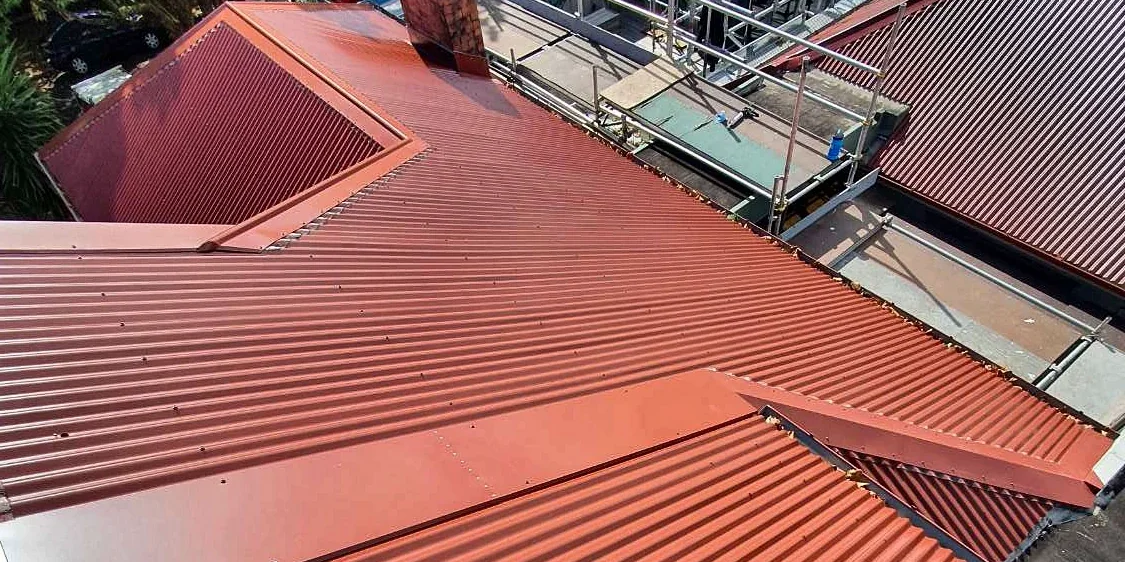
What causes roof leaks on Auckland homes, and how they're fixed: lead-head nails, rust under flashings, pipe flashings, and cracked tiles and bedding.
A stain on the ceiling after a storm, a drip in the hallway, a damp patch that comes and goes. Most roof leaks start small, and most of them come from a short list of places.
This post covers the most common causes of roof leaks we find on the roofs we work on across Auckland, why they happen, how they're fixed, and when a repair is still worth doing.
Short answer: on older metal roofs, most leaks come from the fixings and flashings: lead-head nails working loose, rust under the ridge and other flashings, and failed pipe flashings. On tile roofs, it's usually cracked tiles and the mortar on the ridge and hip caps. Most of these are straightforward to fix if they're caught early. Left too long, the timber underneath goes soft and the steel rusts through, and repairs stop adding much life to the roof.
Until around 1980, metal roofs in New Zealand were usually fixed down with lead-head nails: a smooth steel nail with a cast lead head that seals against the roofing. The NZ Metal Roof and Wall Cladding Code of Practice notes that lead heads often backed out and caused leaks. Here's how that happens.
A building moves. Timber and steel expand and contract with every change in temperature, and over the years the nails work themselves loose. Once a nail has lifted, there's a small gap between the underside of the head and the roofing. When it rains and the wind blows, the sheet is pushed down, the gap opens up, and water runs down the nail into the timber below.
That water softens the timber around the nail, and over time it starts to rot. A nail in soft timber holds very little, so the fixings around it take more of the load, and they start to loosen too. That's why the problem compounds so quickly.
We often hear something like: “I've lived here 20 years and never had a problem. Now there are leaks all over the place.” The roof was fine until it wasn't. By the time leaks show up in several places at once, the damage underneath has usually been building for years. Here's what happens if rot is found when the roof comes off.
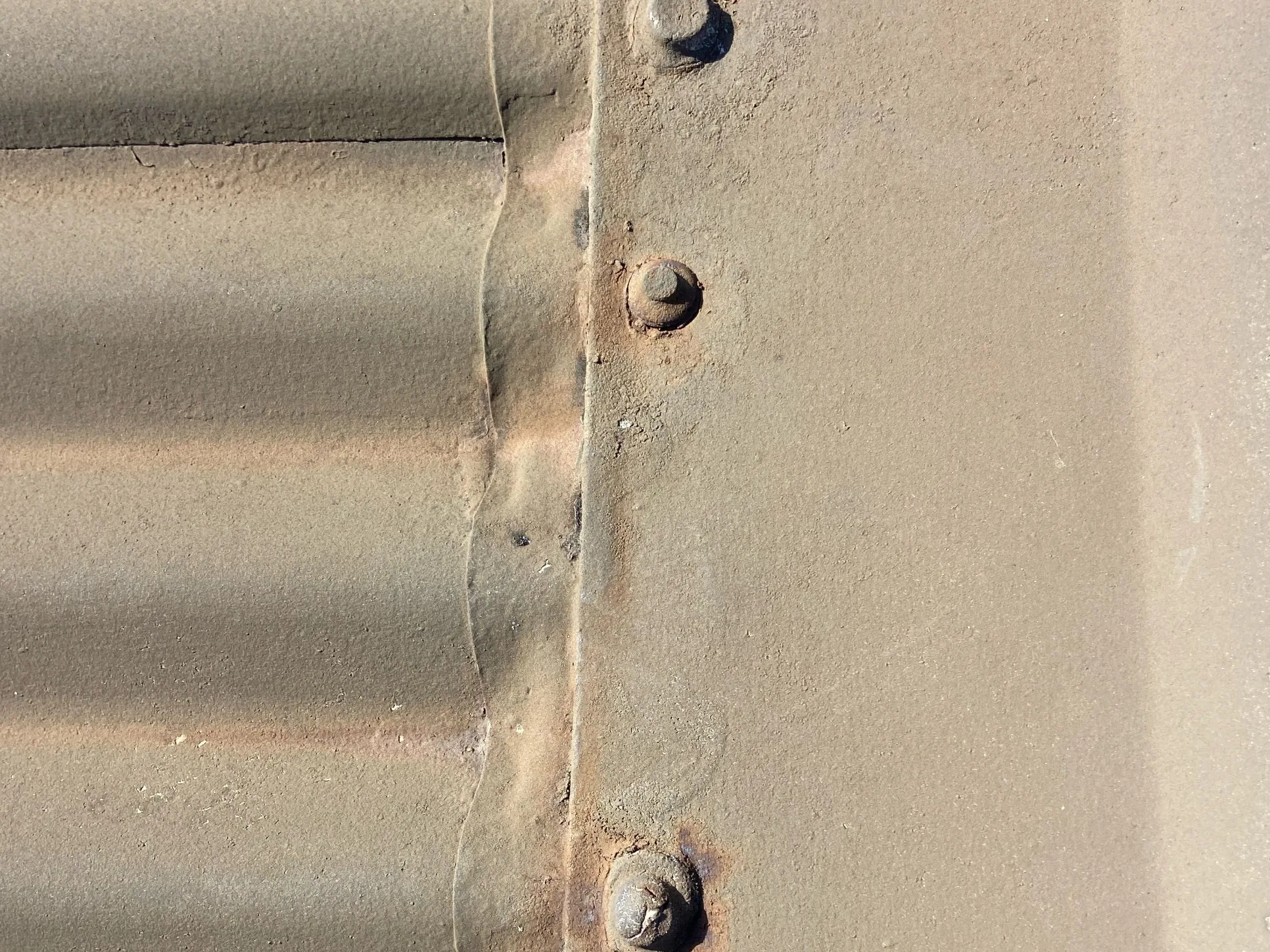

Lead and the steel roofing are different metals. The Code of Practice says lead isn't compatible with modern metallic coatings, and on older roofs we often find the rust starting in the iron around a lead head.
That makes replacing the nails harder than it sounds. Pull a nail out of rusty iron with a hammer and you can tear the sheet. Put a screw into a hole where the steel has already rusted and the screw can pull straight through, making the problem worse.
There's a fine line between maintenance done early enough to extend a roof's life and maintenance done so late that it only buys time.
Replacing lead-head nails with screws and sealing washers is worth doing while the timber is sound and the steel around each hole is still in good condition. Once the timber under the fixings has gone soft and the sheet around them has rusted, a new screw has nothing solid to hold. At that point, in our experience, re-screwing adds very little.
The same goes for paint and coatings. Painting a metal roof that's still in reasonable condition can extend its life. Painting a roof that has gone decades without maintenance, with rusted sheets and loose nails, generally won't. Rust converter doesn't always stop rust that has set in, paint doesn't hold well on a surface in poor condition, and in time it flakes away. Some roof coatings are sold with long warranties, but a coating only protects the surface. It doesn't fix loose fixings, soft timber or failed flashings, so it doesn't change how the roof performs.
If you're not sure which side of that line your roof is on, a roof inspection will tell you. If it's past repairing, here's what a reroof costs in Auckland.

Flashings are the folded metal pieces that cover the joins in a roof: the ridge along the top, barge flashings at the gable ends, apron flashings against walls, and back tray flashings behind penetrations.
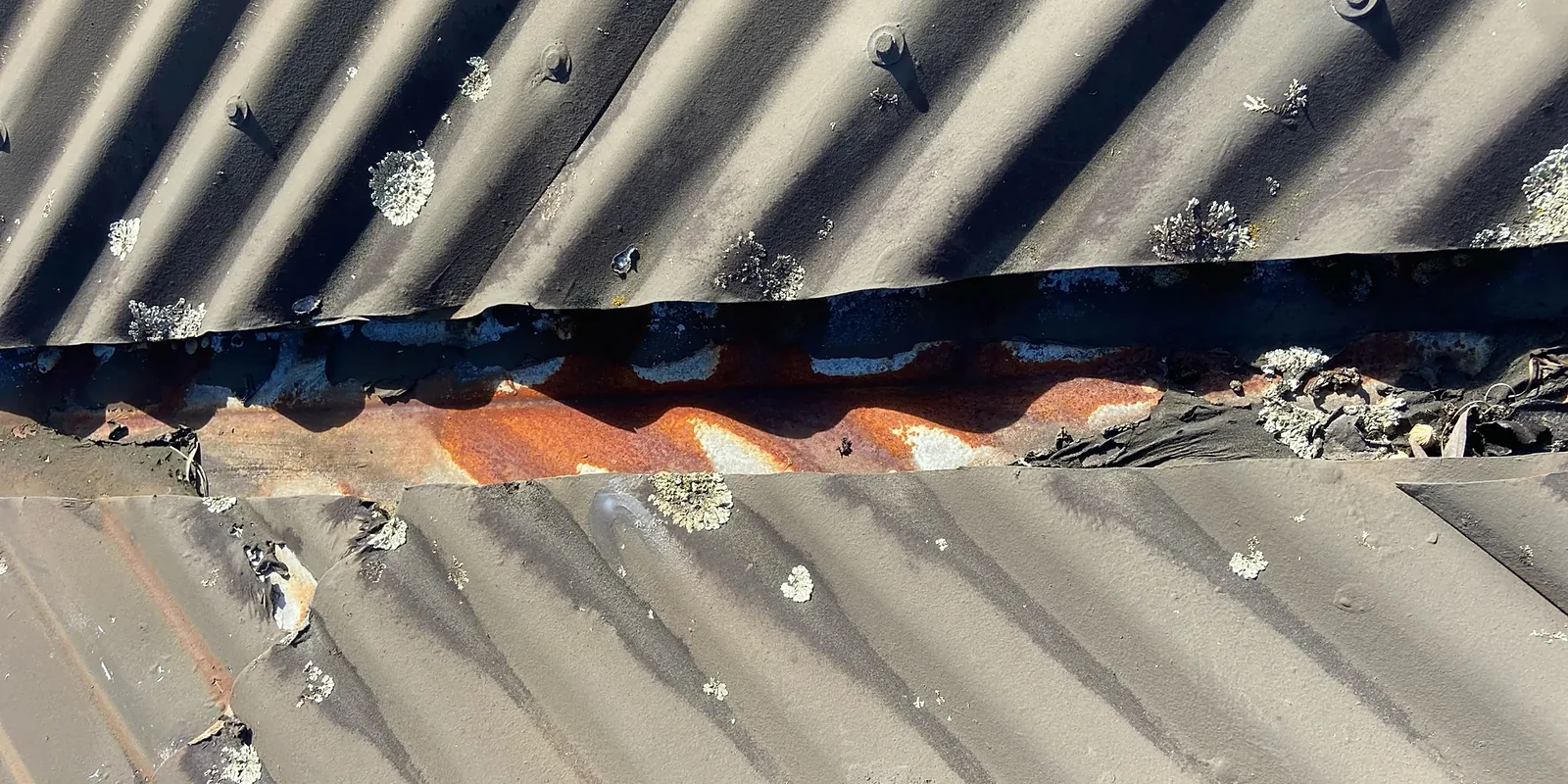
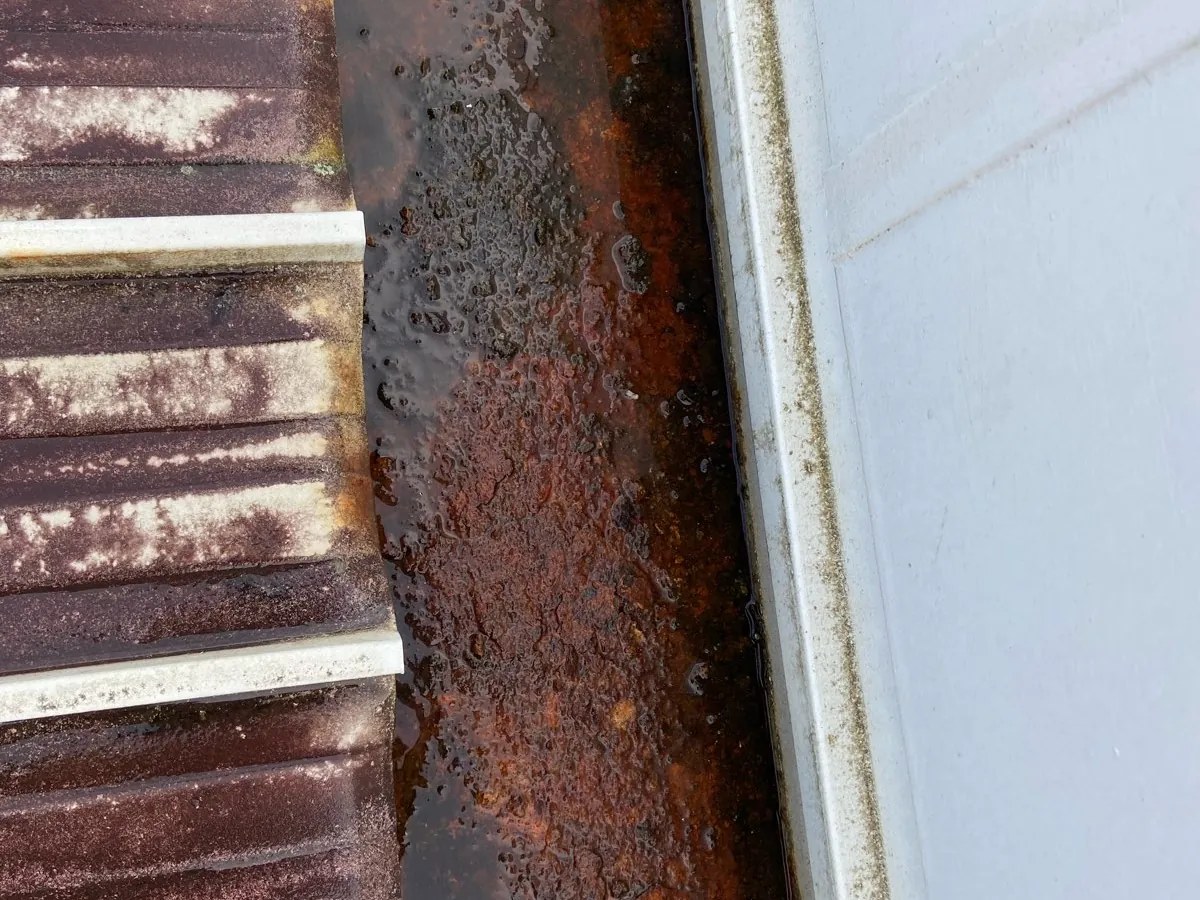
Where a flashing sits on the roofing, moisture can get trapped between the two surfaces, and the steel underneath corrodes where nobody can see it. One leak we see often is at the top of the roof. The tops of the sheets under the ridge have rusted, and in a storm the wind blows rain up under the edge of the ridge flashing and in through the rusted sheet ends.
The fix is to take the ridge off, cut back the rust, turn up the ends of the sheets so water can't get past them, and fit a wider ridge flashing. Whether that works depends on how far the rust has spread. Sometimes it does, and sometimes there isn't enough sound steel left.
Fixings in the wrong place cause leaks too. If a nail or screw has gone through the soft edge of a ridge flashing, water can drip through the gap between the two.

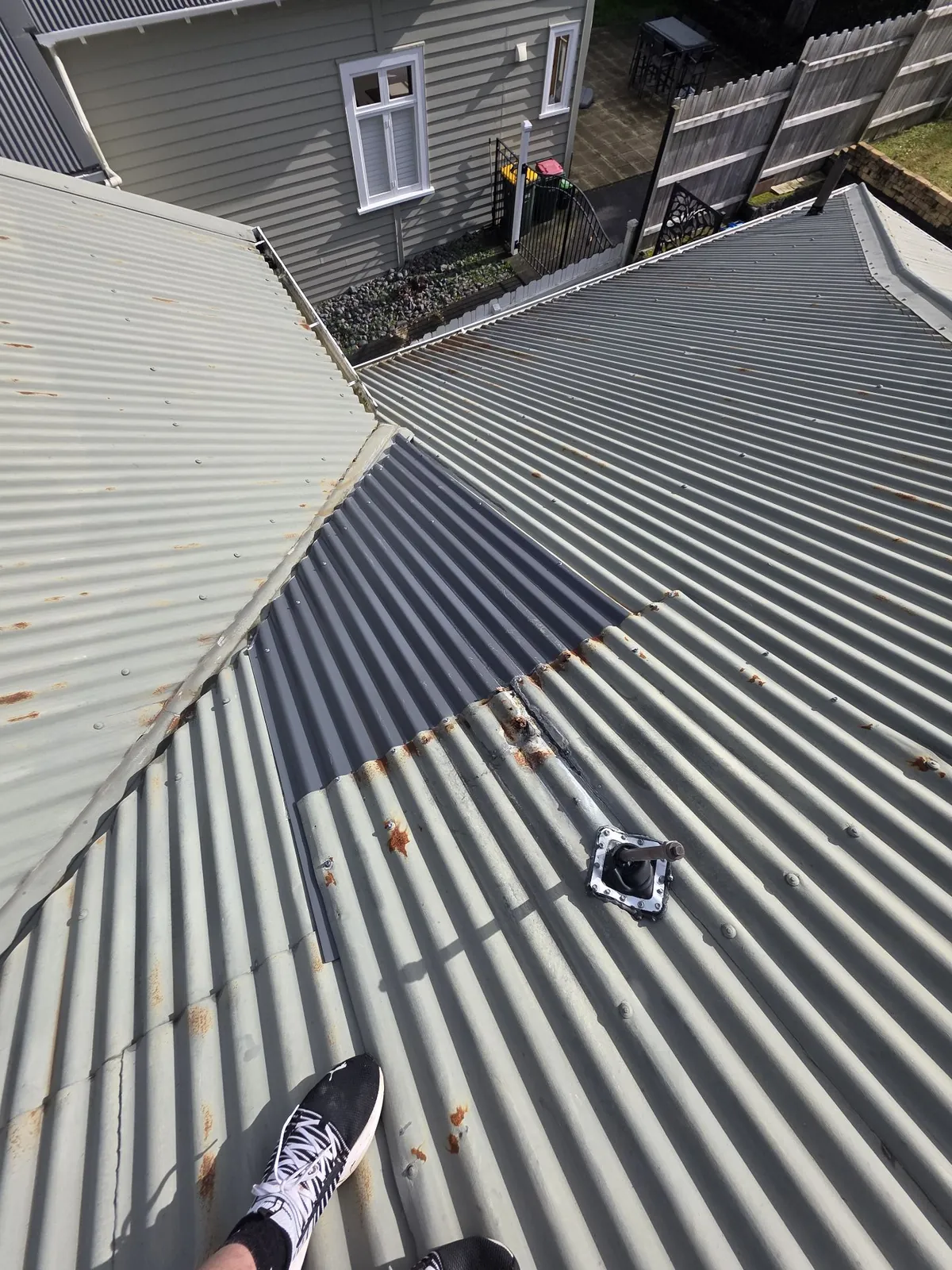
Every pipe, flue and vent that goes through a roof needs a flashing. On metal roofs that's usually a rubber boot, often called a Dektite or Aquaseal, sealed and riveted to the roofing. Over time the rubber and the sealant around it break down.
Many older roofs also have no back tray flashing behind the penetration. Without one, water running down the roof hits the boot and sits in the pans of the roofing behind it. We often find someone has been up and run silicone around the back of the boot, but sunlight breaks that down too.
The fix we use:
A back tray matters for another reason. If a pipe has gone through a sheet lap, water travelling inside the lap runs down, hits the pipe and gets inside. A back tray catches it. We recommend a back tray flashing behind every penetration, whatever its size. The Code of Practice also says a boot shouldn't restrict the flow of water: if it blocks more than half a pan, other options should be considered.
On wide trough profiles, and concealed-fix roofing with flat pans, the bottom ends of the pans should be turned down into the gutter. If they aren't, water can cling to the underside of the sheet and track back up under the roofing instead of dropping into the gutter. The Code of Practice requires turn-downs on low-pitched roofs, and we recommend them on any wide-pan roof.
Some things speed up rust on a steel roof:

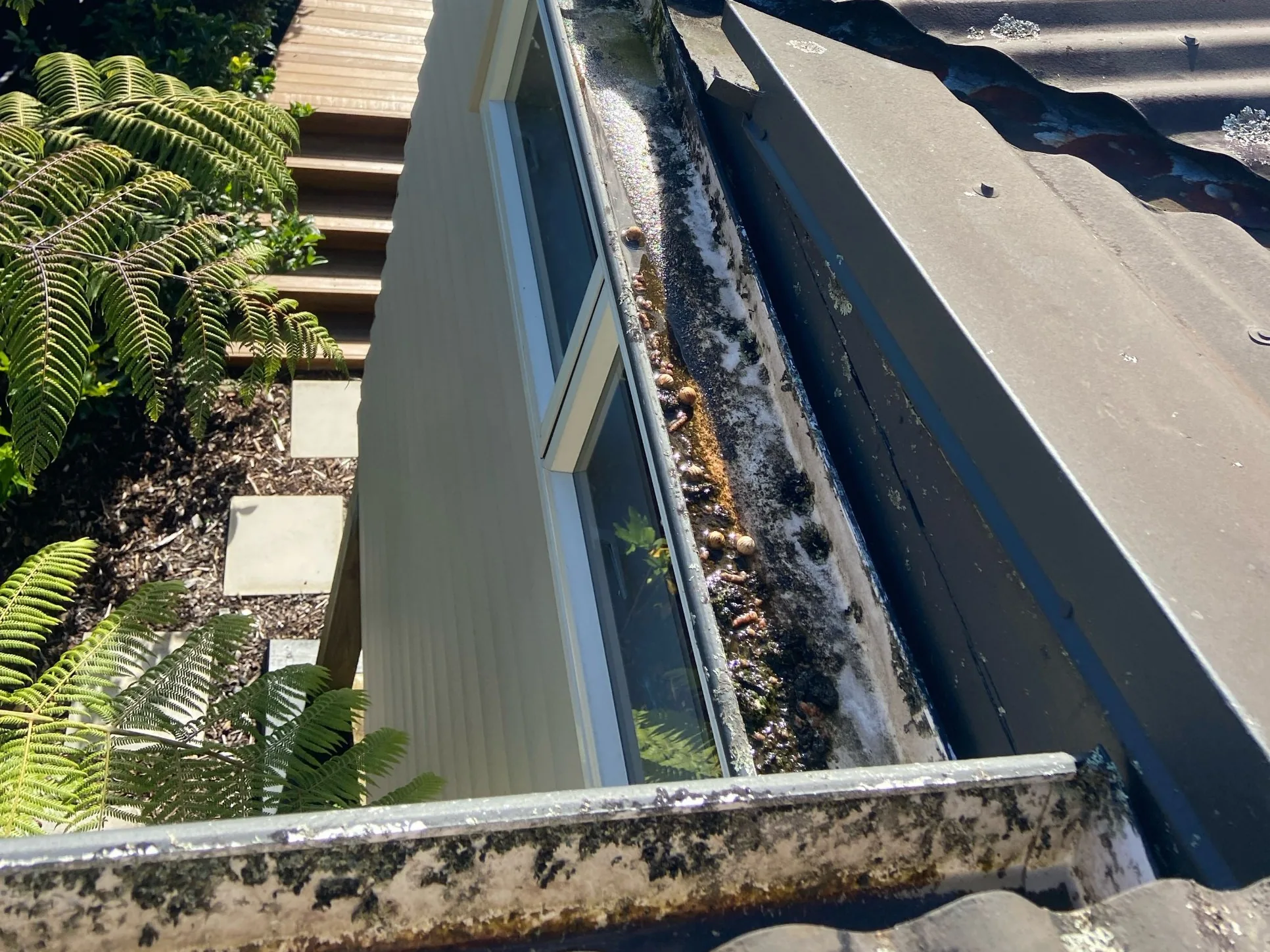
Internal gutters sit inside the roof line rather than hanging off the edge. Steel internal gutters can hold a lot of water, and they tend to corrode faster than the rest of the roof. Older membrane gutters, such as Butynol, tend to fail at the joins or peel away from the surface underneath. When an internal gutter leaks, the water goes straight into the building.
Pressed steel tiles, such as Decramastic, have problems of their own. They're strong at the nose but weak in the middle, so a foot in the wrong place dents the tile and can open a small tear. Water pools in the dent and drips through the tear. The nails holding the tiles down also work loose over time, until the tiles move in the wind and leak at the side laps.
Decramastic-type tiles made from the late 1950s to the early 1980s can have asbestos in the coating, so get them tested before anyone works on the roof. Our asbestos roof removal page explains how removal works.

Concrete and clay are porous. Once the coating has worn, water soaks into the tile, and on cold nights it can freeze, expand and split the tile.
The other common leak is at the ridge and hips. The ridge and hip caps sit in mortar (the bedding), with a finishing layer over it (the pointing). Over time that cracks, and water runs in through the top. If it has no way out, it builds up and leaks inside.
Keeping a tile roof watertight usually means:
There's more on tile maintenance in metal vs tile roofing in New Zealand conditions.

Valleys and gutters carry a lot of water in heavy rain. When leaves and debris block them, the water backs up and can overflow under the roofing or into the house. Keep them clear, especially under trees. If new spouting overflows even when it's clean, the cause is usually the layout or the fall. We've explained that in why your new spouting overflows in heavy rain.
Not every drip comes from outside. Warm, moist air from inside the house can condense on the underside of the roofing and drip onto the ceiling, even when it hasn't rained. If marks appear after clear, cold nights rather than storms, condensation is a likely cause. We've written about it in why your roof needs to breathe.
If you'd like us to look at a leak, see our roof leak repair page.
What is the most common cause of roof leaks?
On older metal roofs, in our experience, it's the fixings and flashings: lead-head nails working loose, rust under flashings, and failed pipe flashings. On tile roofs, it's usually cracked tiles and cracked mortar on the ridge and hip caps.
Why is my old roof suddenly leaking in several places?
Usually because the damage has been building for years. As nails work loose and water softens the timber around them, the fixings nearby take more load and loosen too, so once leaks start they spread quickly.
Can I just replace the nails with screws?
While the timber and steel are still sound, yes, and it's worth doing. Once the timber has gone soft or the steel around the holes has rusted, new screws have little to hold and add little life to the roof.
Will painting my roof stop it leaking?
Not on its own. Painting can extend the life of a roof that's in reasonable condition, but it doesn't fix loose fixings, rusted sheets or failed flashings.
How do you fix a leaking pipe flashing?
Remove the old rubber boot, fit a back tray flashing behind the penetration, and fit a new boot on the diagonal so water runs off the sides. Silicone over an old boot usually doesn't last.
Why does my ceiling get wet when it hasn't rained?
It may be condensation rather than a leak: moist air from inside the house condensing on the underside of the roof.
Sources: lead-head nails from the NZ Metal Roof and Wall Cladding Code of Practice section on fasteners; lead and copper compatibility from its durability section; lichen from its section on biological corrosion; turn-downs from its pre-installation section; pipe flashings from its section on boot flashings.
Technically reviewed by Impact Roofing Solutions.
This article is general roofing information based on our experience working on Auckland properties. Every building and roofing system is different, and requirements can vary depending on the existing construction, location, product specification and proposed work. Project-specific requirements should be confirmed before work begins.
Roofing guides
Seven guides, in the order most people need them.