

Need help quickly? Call us directly.


Operating Buildings
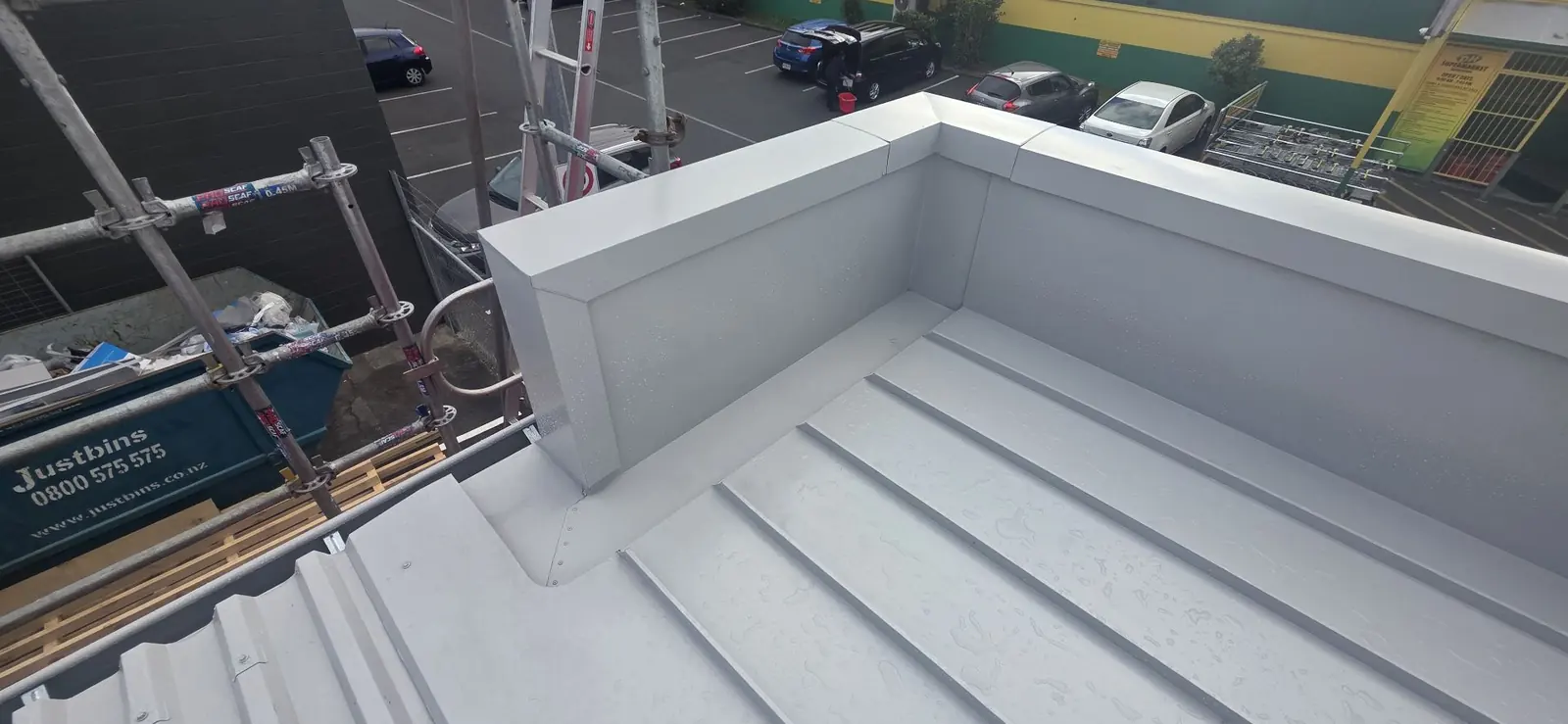
Most commercial roofs sit over a working business. Before work starts, we agree the staging, access, safety and communication with the owner, property manager or tenants, so the building can keep operating wherever the job allows.
The roof is opened and closed in stages the building can cope with, or we use shrink wrap to protect the building where a section of the roof needs to remain open for an extended period of time.
Edge protection or platform scaffolding, crane lifts, safety nets and any traffic management are planned before we start, and work areas are controlled. We are Tōtika pre-qualified.
Start dates, work areas and access are agreed with the owner, property manager or tenants, so the work fits around how the building is used, with disruption to tenants and occupants kept as low as practicable.
Where the job needs it, we coordinate with engineers, electricians and fire system contractors so building services are dealt with in the right order.
Roofing with the underlay already built in. Worth knowing about if you're replacing a commercial or industrial roof.
Roofing with a fleece layer bonded to the underside of the sheet, which does the job separate roofing underlay would otherwise do.
Commercial and industrial buildings, warehouses and sheds. It comes formed as part of the new roofing sheets, so it suits a reroof or a new build roof where the internal area below acts as an industrial type space.
There's no separate underlay to install, so there's less labour required. The sheet costs more, but with that labour taken out, the job can work out cheaper overall.

Full replacement of the roofing on a commercial building that has reached the point where repairs no longer make economic sense. Where the building stays in use, the work is staged so it stays weathertight, and height safety, crane lifts and any traffic management are planned before work starts. If the supporting structure is in question, we involve an engineer. What sits under the old roof can only be fully confirmed once it's opened.

A practical assessment from an installer's point of view: what's wrong, how we'd fix it, how long it should last, and a price on that basis, with photographs. It suits property managers, body corporates and owners weighing repair against replacement. Where a detailed forensic report is needed, we'll refer you to a specialist report provider.

Replacing old translucent sheets with new ones matched to the existing roof profile, fixed and flashed so the laps stay weathertight. It's often done on its own when the rest of the roof still has life in it, or as part of a reroof. Old clearlights aren't safe to stand on, so access and fall protection are planned before anyone works near them.

Repairing or replacing internal gutters, sumps, outlets, downpipes and overflows. A failed internal gutter puts water straight into the building, so the first step is working out whether it can be repaired or needs replacing, and whether it's big enough for the roof area it drains. Replacing a gutter opens part of the building to the weather, so we use temporary protection such as shrink wrap where the job needs it.

Scheduled visits to check the roofing, flashings, fixings, penetrations, gutters and outlets, with small problems dealt with as agreed and anything larger reported with photographs so it can be budgeted for. It suits property managers, body corporates and owners who would rather deal with issues on a schedule than as emergencies. How often we visit is agreed to suit the roof, its age and its exposure.

Repairs to specific failures on a roof that is otherwise serviceable, such as a leaking flashing, a failed penetration, a corroded section of sheeting or a damaged gutter joint. It suits owners who need a problem fixed properly now, including those budgeting for a reroof later. We find the cause before we repair it, and if the roof is past the point where repairs are economical, we'll tell you.
Roofing for new commercial and industrial buildings, installed to the drawings, the specification and the NZ Metal Roofing Manufacturers Code of Practice. It suits owners and developers putting up new premises. We work to the builder's programme, check the substrate before we start, and raise anything on the drawings that will be difficult to build or keep weathertight. A fixed price depends on the drawings and specification being settled.
Cutting new openings into an existing roof for clearlights, vents, fan units, ducting, pipework or access hatches, and flashing them so the roof stays weathertight. It suits owners and tenants fitting out or upgrading a building. Every new opening is a potential leak point, so we check the roof profile, the purlin layout and the fall of the roof before cutting, and coordinate with the trade installing the unit.
Commercial buildings are rarely as straightforward as residential projects, and every client has their own requirements. The work often needs financial planning in advance and planning around tenants and occupants so businesses can keep operating. Some buildings require a scheduled maintenance programme, with costs allocated for ongoing upkeep. Our services cover that range, from one-off repairs through to planned maintenance and full reroofs.
Frequently Asked Questions

In most cases, yes. Most commercial roofs we work on sit over a business that keeps trading while the work is done. Before we start, we agree the staging, work areas, access and timing with the owner, property manager or tenants. The roof is opened and closed in stages the building can cope with, or protected with shrink wrap where a section needs to stay open for longer. Where stock, equipment or work areas sit directly under the roof, we plan around them and keep disruption to tenants and occupants as low as practicable.
It depends. Commercial buildings operate differently from residential properties, and owners often have to work around cash flow, the financial year, budgets and tenant operations, so replacing the roof straight away isn't always feasible. In that case, we can look at options for patch repairs, carried out on the basis that the roof will be replaced. In some situations we'll tell you plainly that the roof needs replacing and that repairs won't extend its life; they're simply an interim way of dealing with the problem until the roof can be replaced. If the roof is at the end of its life and we're asked to keep repairing it instead of replacing it, we'll tell you that isn't a good use of money and help you put a plan in place for the replacement.
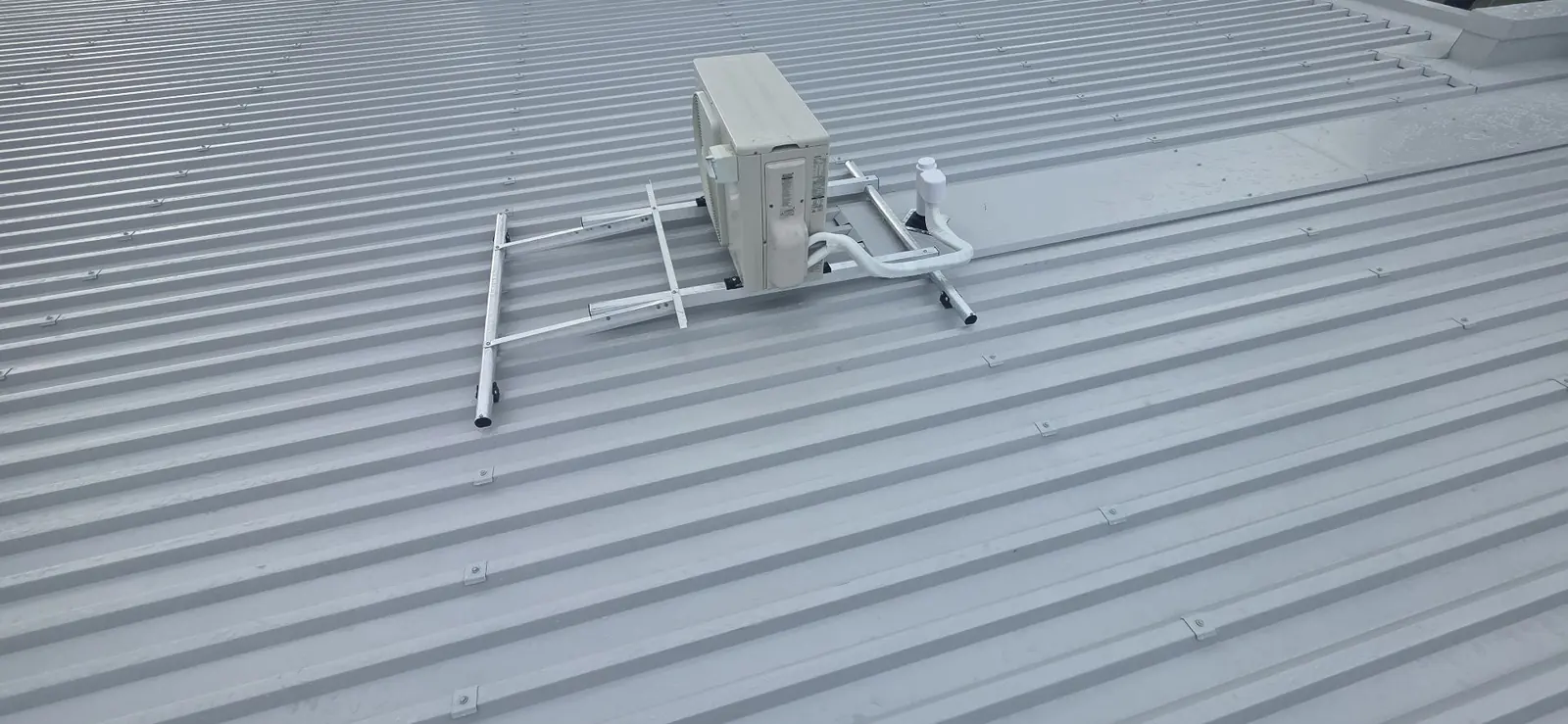
The roofing itself is only part of the cost. Not every job needs them, but a commercial reroof can also include scaffolding or edge protection, safety nets, new anchor points, Monkey Toe® brackets for HVAC systems, large crane or Hiab access, and traffic management where the site needs it. Where the weight loading needs checking, an independent engineer assesses the building's structural integrity. Depending on the building, there may also be internal gutters and clearlights to replace, remedial work to steel purlins or the substrate, and HVAC units that need coordinating with an HVAC technician or other trades. Older Super Six roofs may contain asbestos and need a licensed asbestos removal specialist. Internal gutters that need rebuilding, for example with a TPO membrane, can require shrink-wrapped scaffolding across the building to keep it weathertight while the work is done.
Alongside the new roofing, a reroof often involves flashing new or existing penetrations for vents, ducting and pipework, and coordinating electricians or fire system contractors where services run through the roof. We identify as much of this as we can at assessment, and anything that only becomes clear once the roof is opened is discussed with you before it goes ahead.
It starts with signing in at the premises and completing an induction if one is needed. We then access the roof by hatch, EWP or ladder, or inspect it by drone. We check whether the internal gutters and outlets can be maintained or coated, or need replacing, and look at the condition of the roofing itself; older buildings often have thinner 0.40 mm steel that dents easily. We also look for HVAC units sitting on old timber that is rusting the roof beneath them, old or damaged clearlights, holes where birds have dropped shells, and previous patch repairs. From there, we'll tell you whether repairs and maintenance will help extend the roof's life by a reasonable amount, as a guide at least another five years, or whether replacement makes more sense.
It depends on the size of the roof, how complex it is, access, the weather, the condition of what's underneath, and whether the work has to be staged around the building's use. Commercial roofs are often simpler than residential ones, so the roofing itself can go on faster, but the planning, safety set-up and coordination take longer. The better the planning up front, the faster the project runs. As a guide, a medium to large commercial roof replacement generally takes 2 to 6 weeks. Larger projects can take 8 to 12 weeks; these are specialised jobs that sit within a wider programme with other contractors, so they're best discussed with us directly. We give you an expected programme once the scope and site conditions are understood, and confirm the start date before work begins.
Commercial reroofing can be done year-round, but the best time is usually when the roof's condition, the weather, tenant requirements and your budget line up. Summer gives more reliable working weather, while winter work relies more on staging and temporary protection such as shrink wrap, which can add to the cost. Many commercial clients start planning months ahead so the work can be scheduled around quieter trading periods, drier weather, lease requirements or financial planning. The products being used also matter: some membrane systems are better installed in warmer weather, so solvents can evaporate properly and defects are avoided later on.
Yes, we can, but it needs to be discussed well in advance and coordinated. Working through these periods reduces the disruption to business operations and tenants inside the building, which limits the impact on their trading and cash flow. There is generally a small premium, because our team is working through time they would otherwise have off and we compensate them for it. This is agreed as part of the quote or building contract.
Yes. Clearlight sheets have an expected life of around 10 to 15 years, so they often need replacing well before the rest of the roof. Swapping them out is a straightforward job, but current installation requirements involve more than sliding an old sheet out and a new one in. New sheets go on with purlin pads and flutter bars, profile foam at the bottom to stop birds getting in, and the top end sealed and riveted under the ridge so wind-driven rain can't get back inside. Oversized holes with profile screw fixings let the sheet expand and contract without cracking, and lap tape on the underside of the rib covered by the neighbouring roof sheet stops water being drawn into the laps.


